Dwayne Michael Turner: The Man Who Gave Lil Wayne His Name
Before Dwayne Michael Carter Jr. ever spit a bar, before the tattoos, before the Grammy, before the gold teeth and the purple Styrofoam cups — someone gave him a name and then walked away from it. That someone was Dwayne Michael Turner. He handed his son a full name, a bloodline, and a story soaked in absence. Then he vanished. No press conference. No apology. No social media account. Not even a phone call when that son grew up to become one of the best-selling rappers in American history.
The story of Dwayne Michael Turner is not a story about success. It’s a story about what gets left behind — and what rises from it.
Quick Bio
| Detail | Information |
| Full Name | Dwayne Michael Turner |
| Known As | Biological father of Lil Wayne |
| Nationality | American |
| Ethnicity | African-American |
| Former Spouse | Jacida “Cita” Carter (married ~1982, divorced ~1984) |
| Son | Dwayne Michael Carter Jr. (Lil Wayne), born September 27, 1982 |
| Current Whereabouts | Unknown; possibly Louisiana (unconfirmed) |
| Public Presence | None — no interviews, no social media, no verified photos |
| Estimated Net Worth | ~$500,000 (unverified) |
| Education | Not publicly known |
Early Life: A Mystery with No Beginning
Dwayne Michael Turner’s early life remains largely a mystery, with little publicly available information about his childhood or family background. His birth date isn’t confirmed anywhere in the public record. His education is unverified. His hometown — while he’s associated with New Orleans — has never been formally stated by anyone, including Turner himself.
In the early 1980s, Turner entered into matrimony with Jacida Carter, and they established their residence in the Hollygrove neighborhood of Uptown, New Orleans, situated in Louisiana’s 17th Ward. Hollygrove in those years was not a neighborhood that forgave weakness. It was underfunded, overpoliced, and full of people doing their best under conditions designed to make their best not quite enough.
Jacida took on the role of a cook to support the family financially. She was nineteen years old. She was still finishing high school. And she was, according to multiple accounts, in a relationship that had turned abusive. Jacida Carter was 19 at the time, in the process of graduating from high school, and involved in an abusive relationship with Turner. The picture that emerges is of two very young people in a very difficult place, making choices with lifelong consequences.
What we don’t know about Turner’s early life could fill volumes. What we do know fits on a receipt.
See also “Steven Cauble: The Man Behind the Curtain“
The Turning Point: A Marriage That Ended Before It Began
Turner married Jacida Carter in the early 1980s, and together they had a son, Dwayne Michael Carter Jr. However, this marriage was short-lived, and by 1984, the couple had separated. Their son was barely two years old.
Carter’s parents divorced when he was two years old after his father abandoned the family. There was no custody battle. No co-parenting agreement. No scheduled visits that got skipped — there were no visits to skip. Turner left, and the silence he left behind would prove to be deafening in ways he likely never calculated.
There are a lot of unanswered questions because Dwayne Turner has never publicly explained why he left his family. Speculation has floated for decades — economic strain, personal struggles, emotional immaturity, substance issues — but Turner has never confirmed or denied any of it. He’s never confirmed anything. That’s the most remarkable thing about Dwayne Michael Turner: a man whose most significant act was doing nothing.
He didn’t come back. That was the turning point. Not for his son’s career, which hadn’t started yet. For his son’s identity — which had just been fractured.
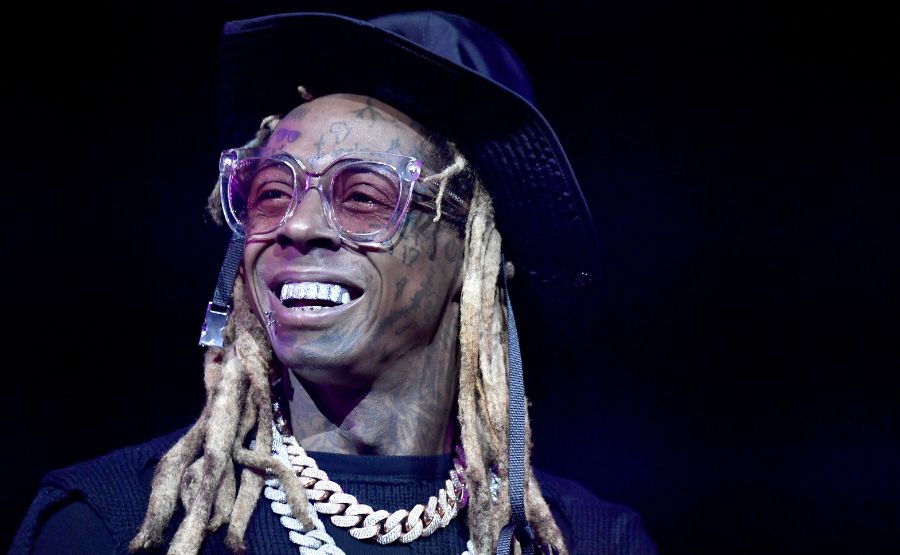
What Became of Turner: The Career Nobody Can Trace
Dwayne Michael Turner’s professional life remains a mystery, with little public information available about his career or any significant achievements. Some biography websites — none of them citing primary sources — describe him as an “actor, producer, and entrepreneur,” but there’s no verifiable evidence supporting this. No film credits. No company registrations in the public domain. No professional footprint of any kind.
Some people think he might still be living in Louisiana, but this is not confirmed. He has never spoken about his famous son or tried to explain why he left. Not one recorded interview exists. Not one photograph in the public domain has been confirmed to be him.
His estimated net worth has been reported by some outlets as roughly $500,000, but no source traces that figure to anything verifiable. It reads like an assumption. Turner’s life after 1984 is, functionally speaking, an open folder with nothing inside.
He became famous by accident — by fathering someone else’s greatness — and managed to remain completely invisible anyway. That takes a particular kind of discipline or a particular kind of shame. Possibly both.
The Son He Left Behind: Early Life in Hollygrove
Dwayne Michael Carter Jr. was born on September 27, 1982. — grew up in Hollygrove without a father, without much money, and with a talent so outsized it practically announced itself. Carter was enrolled in the gifted program at Lafayette Elementary School. He later attended Eleanor McMain Secondary School, where he was an honor student and a member of the drama club, playing the Tin Man in the school’s production of The Wiz.
He was a gifted kid playing the Tin Man. A boy looking for a heart in a neighborhood that didn’t have many to spare.
Carter wrote his first rap song at age eight. In the summer of 1991, he met rapper and Cash Money Records co-founder Bryan “Baby” Williams (known currently as Birdman), who mentored him and encouraged his love of rap music. He was nine years old, freestyling in the streets of New Orleans, impressing adults who ran a record label out of the same city his father had quietly exited.
Rabbit McDonald paid $700 to have Lil Wayne record at a studio. That investment from a stepfather — seven hundred dollars and a belief in a child who wasn’t biologically his — would eventually help birth a rap career worth hundreds of millions. The man whose name Wayne carries contributed nothing to that trajectory. The man who married his mother after Turner left contributed everything.
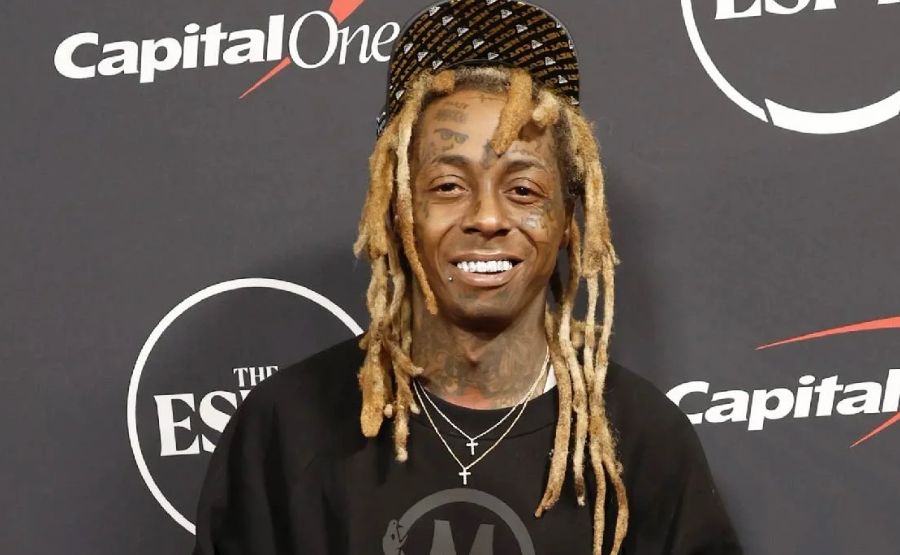
The Men Who Showed Up
Two men filled the space Dwayne Michael Turner left open. One died too soon. The other became complicated.
Reginald “Rabbit” McDonald was Jacida’s next partner, and he did what Turner didn’t. He showed up. He paid for studio time. He moved the family to East New Orleans. He believed in his stepson’s rap dreams when believing in them required something tangible, not just words. Lil Wayne was only 14 when McDonald was shot. Wayne got a tattoo in his memory — his very first tattoo — that read “In Memory of Rabbit: It’s Up To Me.” He was fourteen years old and already eulogizing the only father who’d really tried.
The discovery and mentoring of fellow New Orleans rapper Lil Wayne is Birdman’s most well-known accomplishment. He signed Wayne to Cash Money and called him his son — publicly, repeatedly, and without reservation. Birdman told REVOLT TV: “I was his father when he didn’t have a father since he was 9 years old.” Wayne called him “pops” on tracks. Called himself “Birdman Jr.” in at least one song. Released a collaborative album in 2006 titled Like Father, Like Son — a title that said more about longing than about biology.
The relationship that Turner never built, two other men tried to construct from scratch.
Personal Life: Pain Recorded for Posterity
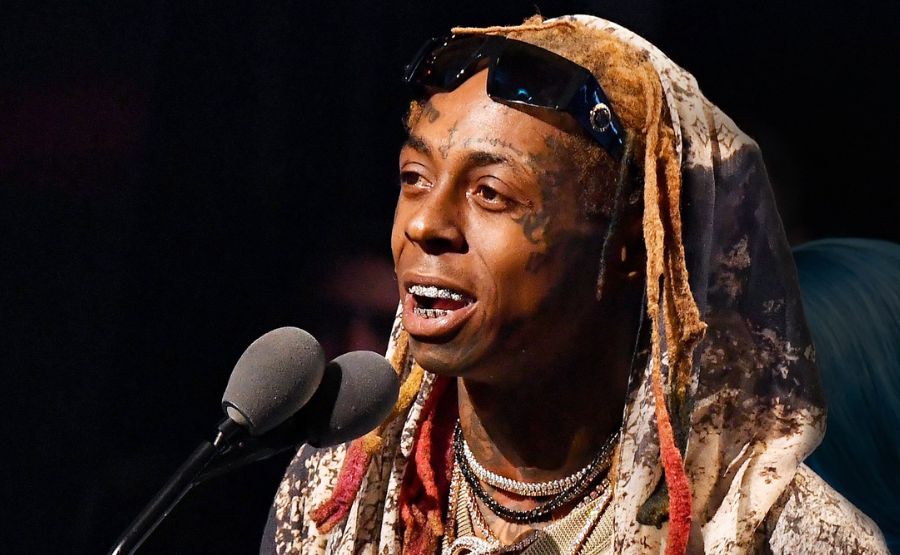
Wayne never let the wound close quietly. He documented it. Lil Wayne once said, “He’s never been in my life, so I don’t want to be Dwayne.” That one sentence explains the entire stage name. He dropped the “D.” He didn’t want to carry that initial, didn’t want people calling him a version of someone who’d forfeited the right to that association.
When asked if Lil Wayne’s many tattoos are a way for him not to look like Dwayne, the rapper said it was just a way of expressing himself. But the emotional math was obvious. Wayne rebuilt himself from the outside in, remaking his face, his name, his identity — everything Turner’s genetics had originally mapped out.
In later interviews, Lil Wayne would go as far as to say, “I don’t have a father. My father’s dead to me.” It ‘s not the language of a man who’s moved on. That’s the language of someone still reckoning with an original wound. The anger never fully dissolved — it just got compressed into lyrics, compressed into albums, compressed into the specific kind of fury that sounds like art when it comes out.
Wayne became a father himself — four times over, to four children: Reginae Carter, Dwayne Michael Carter III, Cameron Carter, and Neal Carter. Lil Wayne’s second kid with Sarah Vivan was born on October 22, 2008. Although everyone in the family refers to their son as Lil Tuney, they gave him the name Dwayne Michael Carter III. He gave his own son the name his father gave him. That choice — keeping the name alive in the next generation while publicly rejecting the man behind it — says something complicated about love, legacy, and the things we can’t quite let go.
Controversies: Turner’s Absence as a Moral Failure
This section has to be honest: Dwayne Michael Turner has not been accused of crimes in any public record, has not been convicted of anything, and has not sought public attention of any kind. What he has done — or rather, what he hasn’t done — is the controversy itself.
Jacida Carter, when 21 years old, was forced to wed Dwayne Michael Turner, Lil Wayne’s biological father, who mistreated her. This is a documented claim that appears across multiple sources. Turner has never addressed it. His silence on the abuse allegations, like his silence on everything else, is total.
There are no reports of him reaching out. No letters, no phone calls, no reunions — not even after Wayne became one of the most famous rappers in the world. When his son won Grammys, Turner said nothing. When his son filed a $51 million lawsuit against his label in 2015 and the whole industry was watching, Turner said nothing. When his son released Tha Carter V in 2018 to massive commercial and critical acclaim after years of legal battles and personal suffering, Turner said nothing.
The controversy isn’t a scandal. It’s a sustained and deliberate disappearance from every moral obligation fatherhood implies.
Some have speculated — without evidence — that Turner struggled with personal issues or substance dependency that contributed to his absence. Those remain unverified. What’s verified is simpler and harder: he left, and he stayed gone.
Where Things Stand in 2026
As of 2026, very little is known about Dwayne Turner. He has stayed completely away from the media. There are no interviews with him, no photos, and no social media accounts.
He is, as best as anyone can determine, still alive. Beyond that, almost nothing is confirmed. His location is unknown. His occupation is unknown. Whether he follows his son’s career from a distance, or whether he’s genuinely indifferent — nobody can say, because Turner himself hasn’t said anything.
Lil Wayne, meanwhile, has rebuilt relationships, settled lawsuits, and continued releasing music. He eventually reconciled with Birdman after their explosive falling-out — Birdman issued a public apology to Wayne at Lil Weezyana Fest in August 2018, saying, “That n***put his life in my hands.” The surrogate father-son relationship, messy as it became, at least had a conversation. At least I had a reckoning. The biological one has had neither.
Turner’s estimated net worth sits around $500,000 according to some outlets — but that figure is unverified and not connected to any traceable business or career.
Legacy: The Absence That Built a Legend
Dwayne Michael Turner’s legacy is entirely paradoxical. He didn’t do anything to earn it, and he can’t escape it.
His departure from a two-year-old boy’s life in 1984 set in motion a chain of events that produced one of the most distinctive voices in American music. The grief of growing up fatherless fed Wayne’s hunger. The anger at being discarded fueled something relentless. Despite the hurt caused by his father’s absence, Lil Wayne used his pain as fuel for his success.
Turner missed Reginae’s birth. He missed Dwayne III’s first steps. He missed every platinum plaque and every concert where 50,000 people sang his son’s words back at him. He missed the lawsuit, the recovery, the reconciliation. He missed a life that, by any reasonable measure, was extraordinary to witness.
What Dwayne Michael Turner represents — in the story of one of America’s most celebrated artists — is the peculiar weight of absence. Not villainy. Not drama. Just a door closing in 1984 and never opening again.
Lil Wayne named a third child after the name he publicly rejected. He tattooed the stepfather who died young, not the biological father who just disappeared. He built fatherhood — imperfect, complicated, public fatherhood — into the core of his identity, perhaps because he knew firsthand what it cost a child to be without it.
Turner’s legacy isn’t his own. It belongs to the shape of the hole he left, and to the man who filled it with music.
Conclusion
In the break, the story of Dwayne Michael Turner is now defined not through what he did, but using what he now chose not to do. He left earlier, said nothing and in no way again, and the silence became a part of the identity of others. For Lil Wayne, absence not only created his youth, but it cut out the drive, the pain and the hunger that fueled his rise.
This is not a story that is usually about redemption or reconciliation. It is often that the lack of presence can still leave a lasting mark. Turner’s legacy exists in relation to his son within his extended life, within a growing achievement, where help was by no means uncommon and his absence was part of the impetus for something much greater than something that remained.
FAQs
1. Who is Dwayne Michael Turner?
Dwayne Michael Turner is the biological father of rapper Lil Wayne (born Dwayne Michael Carter Jr.). He married Lil Wayne’s mother, Jacida “Cita” Carter, in the early 1980s in New Orleans, and the couple separated around 1984, when their son was approximately two years old.
2. Why did Lil Wayne no longer go by “Dwayne”?
Lil Wayne stated, “He’s never been in my life, so I don’t want to be Dwayne.” Dropping the “D” was a deliberate act of emotional separation from a father who abandoned him.
3. Has Dwayne Michael Turner ever made an effort to get back in touch with Lil Wayne?
There is no public record of Turner attempting to reconnect with his son at any point — not during Wayne’s childhood, not during his rise to fame, and not after his son became one of the best-selling rappers in history.
4. Who did Lil Wayne consider his real father?
Carter has said that he considers his deceased stepfather Reginald “Rabbit” McDonald to be his real father. He also publicly called Birdman (Bryan Williams) his father figure for many years.
5. What happened to Reginald “Rabbit” McDonald?
Rabbit McDonald was shot when Lil Wayne was only 14. Wayne got his first tattoo — “In Memory of Rabbit: It’s Up To Me” — shortly after his death.
6. Is Dwayne Michael Turner still alive?
There is no confirmed information about his death, so he is presumed to still be alive. However, his exact whereabouts and current situation remain unknown as of 2026.
7. What is Dwayne Michael Turner’s net worth?
Some outlets estimate his net worth at approximately $500,000, though this figure has no verified source and is not connected to any traceable career or business activity.
8. Did Dwayne Michael Turner have other children?
No public records confirm other biological children. His marriage to Jacida Carter produced one known child: Lil Wayne.
9. Was Dwayne Michael Turner abusive?
Multiple accounts describe Jacida Carter as having been in an abusive relationship with Turner. Turner has never publicly addressed this claim.
10. How old is Dwayne Michael Turner?
His precise birthdate has never been made public. Based on contextual estimates — given that his son was born in 1982 — he is believed to be in his mid-to-late 60s, though this is an estimate only.
11. Did Lil Wayne ever meet his biological father?
There is no confirmed public account of the two ever meeting in person after Turner left the family in the early 1980s.
12. Where is Dwayne Michael Turner now?
Unknown. Some people think he might still be living in Louisiana, but this is not confirmed.
13. Did Lil Wayne name any of his children after his father?
Yes. Despite publicly distancing himself from the name “Dwayne,” Wayne named his son Dwayne Michael Carter III — a choice that speaks to the complicated emotional legacy Turner left behind.
14. What was the Hollygrove neighborhood like where Turner and Jacida lived?
The Hollygrove neighborhood was recognized for its challenging socio-economic conditions, which significantly influenced the upbringing of their son.
15. Has Dwayne Michael Turner ever spoken publicly about Lil Wayne?
No. Not once. Not during Wayne’s rise, his legal battles, his Grammy wins, or his personal struggles. Turner’s silence on his son is absolute and unbroken.
Come back to K and V nails for smarter ways to stay informed.