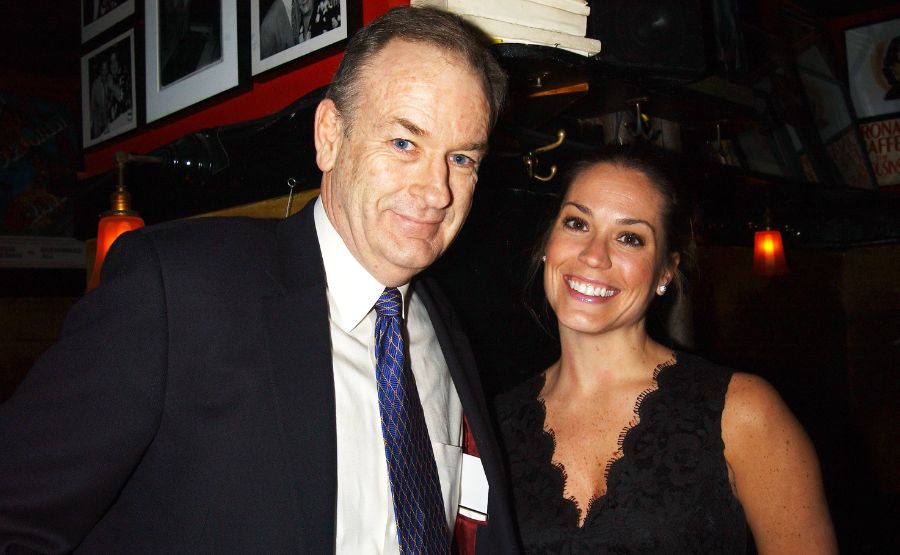
The Story of Maureen E. McPhilmy: The Woman Who Stayed Quiet — And Won
She never held a press conference. She didn’t write a book. She didn’t go on television to tell her side of things, even when she had every reason to. While one of America’s loudest voices spent years painting her as the villain in a very public legal war, Maureen E. McPhilmy did something that, in the social media era, feels almost radical: she said nothing and went home to her children.
That choice — to stay silent, stay steady, and stay out of the spotlight — may be the most defining thing she’s ever done.
Quick Bio
| Detail | Information |
| Full Name | Maureen Elizabeth McPhilmy |
| Date of Birth | May 11, 1966 |
| Place of Birth | Chittenango, New York, USA |
| Nationality | American |
| Education | St. Peter’s School, New York; reportedly attended St. John’s College |
| Profession | Public Relations Executive |
| First Marriage | Bill O’Reilly (November 2, 1996 – September 1, 2011) |
| Second Marriage | Jeffrey Gross (circa 2012, present) |
| Children | Madeline O’Reilly (b. 1998), Spencer O’Reilly (b. 2003) |
| Current Residence | Manhasset, New York |
| Estimated Net Worth | ~$4 million (estimate; unverified publicly) |
Early Life: A Small Town, A Fractured Home
Chittenango, New York isn’t the kind of place that produces tabloid fodder. It’s a small village in Madison County best known, oddly enough, for being the birthplace of Wizard of Oz author L. Frank Baum. The community is tight, modest, and quiet. That’s where Maureen Elizabeth McPhilmy came into the world on May 11, 1966.
Her childhood was shaped early by disruption. Her parents split when she was just five years old — her mother tended gardens for a living, her father worked at a local market. Two working-class people who couldn’t make it work. A five-year-old doesn’t understand the sociological stigma associated with divorce in small-town New York in the mid-1970s. She just lives it.
She enrolled at St. Peter’s School, and by some accounts later attended St. John’s College. It’s worth noting clearly: detailed records of her academic years aren’t publicly available, so anything beyond her high school and reported college attendance is unverified. What can be said is that she came out of those years with a head for communication — and an instinct for how to shape a story.
Before she landed in public relations, she reportedly worked as a waitress. That detail matters. It’s the foundation of someone who figured out early that ambition wasn’t going to be handed to her.
See also “Dwayne Michael Turner: The Man Who Gave Lil Wayne His Name“
The Career: She Knew How Headlines Were Made
By 1992, Maureen McPhilmy had moved into public relations, a field built on the gap between what’s true and what the public gets to see. She was good at it. She understood how to manage perception, how to communicate under pressure, and — critically — when to say nothing at all.
That year, she was working in a PR capacity on a syndicated tabloid television show called A Current Affair. The show was sharp, provocative, and popular. Its host was a brash, confident television journalist named Bill O’Reilly.
PR executives and television hosts often develop working relationships. Sometimes those working relationships become something else. In this case, they did.
Maureen’s professional life before and after that meeting isn’t well-documented — she’s never been the subject of a career retrospective, and she’s given no interviews. What the record does show is that she remained a working professional throughout her marriage, and that her career continued after it ended. People who worked alongside her consistently described her as composed, competent, and discreet. Three words that would prove essential.

The Marriage: Fifteen Years Behind Closed Doors
They married on November 2, 1996, at St. Brigid’s Parish in Westbury, New York, in front of more than a hundred guests. She was 30. He was 47. The age gap was 17 years.
By then, Bill O’Reilly was ascending fast. The O’Reilly Factor launched on Fox News the same year they married, and it would go on to become the highest-rated cable news program in the United States, earning O’Reilly a reported $15 million per year at his peak. He was powerful, famous, and — in his own telling — a champion of traditional family values.
The couple had two children. Madeline was born in 1998. Spencer followed in 2003. From the outside, the picture looked conventional: a high-profile television personality and his accomplished wife raising a family in Long Island’s affluent suburbs.
What happened inside that home is disputed. O’Reilly has denied the most serious allegations. But court documents — including a notarized affidavit signed by Maureen in October 2011 — would later describe a marriage that had turned violent.
She stayed for fifteen years. That is a fact that should not be ignored.
The Turning Point: One Night, One Affidavit
In 2010, the couple separated. Their divorce was finalized on September 1, 2011. What followed was not a clean break.
According to a sworn affidavit Maureen filed in the custody proceedings, she alleged that during a domestic incident in 2009, O’Reilly discovered her in their bedroom, became enraged, slammed her into a wall, and then dragged her by the neck down a flight of stairs and through the kitchen. She stated that a security guard assigned to their home witnessed the attack and intervened.
O’Reilly denied the allegations.
The affidavit might have stayed buried in sealed court documents. But in 2015, the website Gawker obtained partial transcripts from the custody proceedings. Those transcripts revealed something that cut deeper than any sworn statement from Maureen herself: the couple’s daughter Madeline, then approximately 16 years old, told a court-appointed forensic examiner that she had personally witnessed her father drag her mother down the stairs by the neck.
A teenager told that to a forensic examiner. Not a lawyer. Not a reporter. A court-appointed professional, in a sealed proceeding, years after the fact.
O’Reilly has continued to deny the allegations. The court, for its part, ultimately awarded Maureen residential custody of the children — though the ruling was based primarily on the expressed wishes of the older children and New York’s general stance against joint custody between parties in active conflict, rather than any explicit finding on the domestic violence allegations.
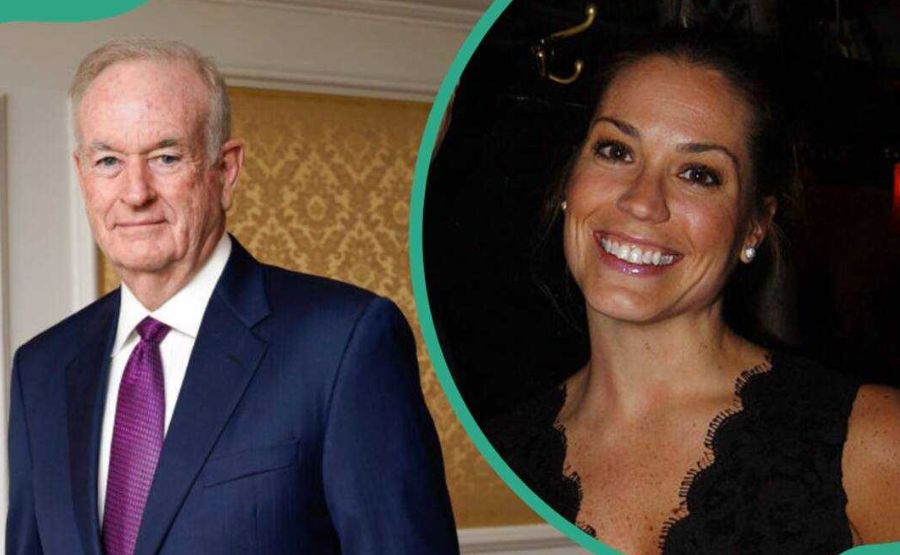
Career Rise: Navigating a Field That Rewards Composure
It may seem ironic that a woman who spent over a decade managing other people’s public images found herself the subject of years of unwanted headlines. But there’s a logic to it, too. Maureen’s professional skill set — knowing when to speak, knowing what not to say, knowing how to wait out a media cycle — was precisely what she drew on when her private life became public property.
Public relations is, at its core, about control of the narrative. Maureen appears to have decided very early that the best way to control her narrative was to give it no oxygen. She didn’t feed the story. She didn’t hire a publicist to fight back. She didn’t appear on morning television. She let the legal process do what it would and kept moving.
Her career continued through and after her divorce. She has continued working in public relations, though she’s kept the specifics of her clients and projects private. No major profile pieces exist, no speaking engagements are on record, no company website bears her name prominently. That’s not an accident. That’s strategy.
Personal Life: Loss, Loyalty, and a Blended Family
After her separation from O’Reilly, Maureen began seeing Jeffrey Gross, a Nassau County Police detective. That relationship would spark years of additional conflict with her ex-husband — but it would also, eventually, become the foundation of a quieter and more stable life.
Jeffrey Gross is a widower. His first wife, Kathleen McBride, died of cervical cancer in 2006, leaving him to raise two teenage children alone. He was, by all available accounts, a career officer who’d served Nassau County for over a decade before he ever crossed paths with Maureen McPhilmy.
They married around 2012. Together, they built a blended family: Maureen’s children Madeline and Spencer, and Jeffrey’s two children from his first marriage. Four kids, two households now merged into one, in Manhasset, New York. The logistics alone require patience. The emotional architecture requires more.
There’s no documented version of this family from inside their home — no Instagram accounts, no magazine profiles, no holiday cards sent to journalists. Just the occasional legal filing, and the absence of scandal, which in this context says a great deal.
The Controversies: A War Fought in Courtrooms and Sealed Files
The post-divorce legal battle between Maureen McPhilmy and Bill O’Reilly has few equivalents in modern celebrity divorce history — not for its glamour, but for its sustained ugliness and the lengths to which O’Reilly allegedly went to gain the upper hand.
After agreeing to an initial custody arrangement in which the couple would share joint custody on a week-on, week-off basis, O’Reilly hired the supposedly neutral custody arbitrator — a social worker named Lynne Kulakowski — as a full-time nanny for his children. The move effectively put the person designated to make impartial custody decisions on his private payroll, without disclosing this to Maureen or the court. When the arrangement came to light, a Nassau County Supreme Court judge found it constituted performing “virtually all of his parental duties” through a paid employee, and the Appellate Division ordered a hearing.
That’s not all. According to reporting by Gawker and confirmed through court filings and legal analyses, O’Reilly also used his connections to reportedly arrange an Internal Affairs investigation into Jeffrey Gross — the detective Maureen was then dating — through the Nassau County Police Department. The timing coincided with O’Reilly reportedly considering a major donation to the Nassau County Police Department Foundation. The investigation into Gross went nowhere. His career remained intact. He married Maureen.
O’Reilly additionally attempted, by some accounts, to have Maureen excommunicated from the Catholic Church, reportedly informing church officials that she was receiving communion despite being divorced and remarried, and that she was telling their children her second marriage was valid in the eyes of God.
In April 2016, O’Reilly filed a $10 million lawsuit against Maureen, alleging she had fraudulently induced him into signing the 2011 separation agreement while concealing a pre-existing relationship with Gross. The lawsuit was widely reported. What received less attention: reporting by Jezebel revealed that O’Reilly had quietly obtained a $14.5 million default judgment against Maureen in a proceeding conducted largely in secret — though the exact basis and current status of that judgment remained unclear from sealed filings. He also separately sued her former divorce attorney for $10 million.
In 2015, a Nassau County judge found Maureen in civil contempt of court for failing to transfer their then-16-year-old daughter to O’Reilly’s home during his scheduled custody week. Maureen argued their daughter didn’t want to go. The judge fined her $2,500 per day of noncompliance — which totaled $310,000. Maureen filed an appeal.
The proceedings have been described by at least one presiding judge as “marathon litigation” and “parental warfare.”
Both sides bear legal responsibility for decisions made throughout this process. The courts found fault with both parties at various points. What’s documented is a years-long pattern of escalation in which the children were, inevitably, caught in the middle.
Where She Is Now: The Quiet Chosen on Purpose
Maureen McPhilmy is 59 years old. She lives in Manhasset, New York with Jeffrey Gross and their blended family. Madeline and Spencer are adults now — they were children when their parents divorced, teenagers when the worst of the custody battles played out in sealed courtrooms, and young adults when the dust finally, partially, settled.
She doesn’t have a verified public social media presence. She doesn’t give interviews. She hasn’t written a memoir or hired a speaker’s bureau or appeared on a podcast to share her experience of surviving a high-profile marriage to a man who was, two years after their divorce was finalized, fired from Fox News amid a cascade of sexual harassment settlements totaling tens of millions of dollars. Settlements, it should be noted, had nothing to do with Maureen herself.
She shows up, by all indications, to her job. To her family. To a life that is hers alone to define.
That’s the whole story, and it’s enough.
Legacy: What It Means to Refuse the Narrative
Maureen McPhilmy’s legacy isn’t a list of professional achievements or a cause she championed publicly. It’s a set of choices that, accumulated over decades, say something coherent about who she is.
She was a working professional before her marriage, not a celebrity spouse who stumbled into employment. She maintained that professional identity through fifteen years of marriage to one of cable television’s most powerful figures. She documented what she said happened to her through proper legal channels rather than through tabloid stories. When the court’s process favored her, she sometimes pushed too hard and paid for it legally. She wasn’t a flawless actor in a complicated drama. She was a human being in the middle of an extraordinarily difficult situation, making imperfect choices under enormous pressure.
What she didn’t do was dissolve. She didn’t lose herself in the story someone else was telling about her. She built a new marriage, raised four children in a blended household, and kept working.
For any woman navigating a painful divorce — particularly one in which the other party has resources and connections she doesn’t — the message of Maureen’s story is plain: the loudest voice doesn’t always win. Sometimes the person who stays focused, stays professional, and stays quiet accumulates something more durable than a headline.
She came from a small town in central New York. She ended up, involuntarily, at the center of one of the most acrimonious celebrity divorces of the 2010s. She walked out the other side.
That counts.
Conclusion
Maureen E. McFilmy’s story doesn’t leave a headline or a very recent court ruling. Finally, something quieter, and arguably more difficult, is achieved, a life rebuilt on its own terms. While Bill O’Reilly remained a strong public voice, she chose an unconventional path, one that hid her from the limelight, aiming for stability, portraits, and family.
What comes out of it is not achievement or victory in the dramatic sense. It’s consistent. She stayed in her profession, raised her children through years of struggling with crime, and created a second marriage with Jeffrey Gross that seems to be based on secrecy and normalcy. There have been setbacks, legal sanctions and tough choices, yet none of them have derailed the larger path of her lifestyle.
Her story in Quiet is less about the war she identified with by speculating and more about how she went beyond it. She wasn’t trying to win publicly. She focused on what she could change and time to relax. That method may not make headlines and yet it has created something extra sustainable, a lifestyle that does not rely on the other.
FAQs
1. Who is Maureen E. McPhilmy?
Maureen Elizabeth McPhilmy is an American public relations executive, born May 11, 1966, in Chittenango, New York. She is best known publicly as the former wife of Fox News host Bill O’Reilly, though she has maintained a career in PR independent of that association.
2. When did Maureen McPhilmy and Bill O’Reilly get married?
On November 2, 1996, they tied the knot at Westbury, New York’s St. Brigid’s Parish.
3. Why did Maureen McPhilmy and Bill O’Reilly divorce?
They separated in 2010 and finalized their divorce on September 1, 2011. Maureen alleged in sworn court documents that O’Reilly was physically abusive during their marriage. O’Reilly denied those allegations. The court did not issue a formal finding on domestic violence in awarding custody.
4. What happened in the custody battle?
The custody dispute lasted approximately three years, involving multiple court levels. O’Reilly was found to have placed the mutually agreed-upon neutral custody arbitrator on his personal payroll as a full-time nanny — a conflict the courts took seriously. The Appellate Division ordered a hearing, and residential custody was ultimately awarded to Maureen. A separate judge later found Maureen in contempt for blocking O’Reilly’s scheduled access to their daughter and fined her $310,000.
5. Who is Jeffrey Gross?
Jeffrey Gross is a Nassau County, New York police detective. He is a widower — his first wife, Kathleen McBride, died from cervical cancer in 2006. He and Maureen married around 2012 and currently live in Manhasset, New York, raising a blended family.
6. How many children does Maureen McPhilmy have?
She has two biological children with Bill O’Reilly: daughter Madeline (born 1998) and son Spencer (born 2003). Her husband Jeffrey Gross also has two children from his first marriage.
7. Did Bill O’Reilly sue Maureen McPhilmy?
Yes. In April 2016, O’Reilly filed a $10 million lawsuit against Maureen, alleging she fraudulently induced him to sign the divorce settlement. He also filed a separate $10 million lawsuit against her former divorce attorney. Reporting also indicated he obtained a $14.5 million default judgment in sealed proceedings, the full details of which remain unclear due to court secrecy orders.
8. What is Maureen McPhilmy’s net worth?
Her net worth is estimated at approximately $4 million, derived from her career in public relations and her divorce settlement. This figure is an estimate from secondary sources and hasn’t been publicly verified by Maureen herself.
9. Where does Maureen McPhilmy live now?
She lives in Manhasset, New York, with her husband Jeffrey Gross and their blended family.
10. Does Maureen McPhilmy use social media?
She has no verified public social media presence. She appears to have made a deliberate choice to remain out of public view.
11. What was Maureen McPhilmy’s job before marrying Bill O’Reilly?
Before entering public relations in 1992, she reportedly worked as a waitress. She transitioned into PR and was working as a public relations executive on the TV show A Current Affair when she met O’Reilly.
12. Did Maureen McPhilmy’s daughter testify about domestic violence?
According to Gawker’s 2015 reporting on partially obtained court transcripts, the couple’s daughter Madeline told a court-appointed forensic examiner that she witnessed her father drag her mother down a flight of stairs by the neck. O’Reilly denied the underlying allegations.
13. What did O’Reilly allegedly do regarding Jeffrey Gross?
According to reporting by Gawker and legal analyses of the proceedings, O’Reilly reportedly used connections with the Nassau County Police Department to have Jeffrey Gross subjected to an Internal Affairs investigation. The investigation reportedly yielded nothing, and Gross’s career remained unaffected.
14. Did O’Reilly try to have Maureen excommunicated from the Catholic Church?
Multiple sources report that O’Reilly contacted the Catholic Church with allegations that Maureen was receiving communion improperly after her divorce and remarriage. The effort reportedly did not succeed.
15. Is Maureen McPhilmy a public figure?
She occupies an ambiguous position — drawn into public scrutiny through her marriage to a major media figure, but never having sought public attention herself. Courts have at various points sealed proceedings involving her, in part to protect the children. She has consistently chosen privacy over publicity.
Come back to K and V nails for smarter ways to stay informed.