What Happened to Barbara Roufs: The Woman Who Lit Up the Drag Racing World and Disappeared from It
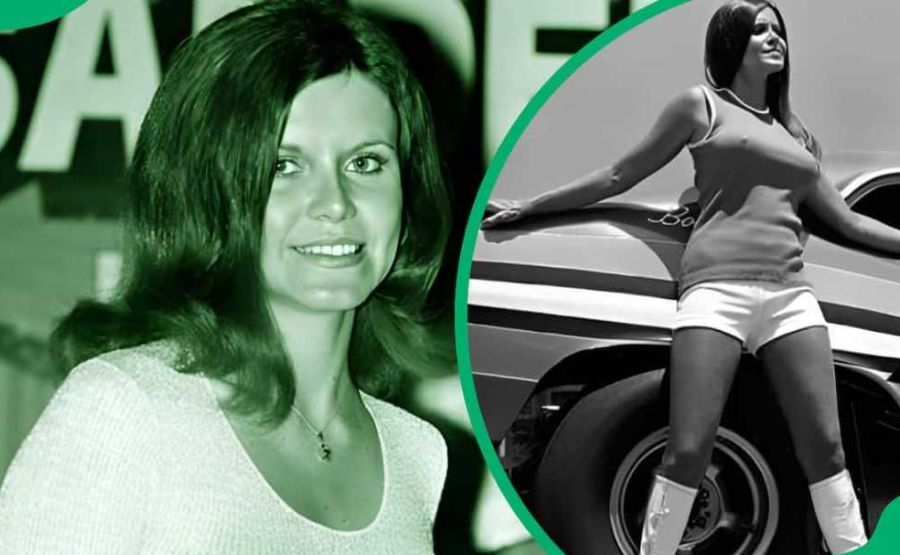
There’s a photo of her from the early 1970s.
Long brown hair. Go-go boots. A smile that just… grabs you. She’s standing next to a dragster at Orange County International Raceway, and she looks completely at home. Like the track was built around her, not the other way around.
That was Barbara Roufs.
And the thing is — most people today have never even heard her name.
But once you do. Once you go down that little rabbit hole of old photos and racing forums and her daughter’s quiet tribute from 2016 — you can’t really forget her. There’s something about her story that sticks. Maybe because it’s beautiful. Maybe because it’s sad. Maybe just because it’s real.
So let’s talk about it. All of it.
Quick Bio
| Detail | Info |
| Full Name | Barbara Jean Riley Roufs |
| Born | 1944, Clovis, California, USA |
| Died | January 1991, Fresno, California |
| Age at Death | 47 |
| Cause of Death | Suicide (reason undisclosed) |
| Profession | Drag Racing Trophy Girl, Model |
| Height | 5 ft 5 in (165 cm) |
| Weight | 55 kg (118 lbs) |
| Measurements | 32-25-32 |
| Father | Wayne Eldon Riley (motorcycle racer) |
| Mother | Thelma Ruby Riley (beauty salon owner, church organist) |
| Siblings | Vivian Deaton, James Riley, Bruce Riley, Ben Gube (adopted) |
| Daughter | Jet Dougherty |
| Granddaughter | Crystal Dougherty |
| Famous Titles | Queen of 6th Annual U.S. Professional Dragster Championship (1970), PDA Queen (1973) |
| Photographer | Tom West |
| Estimated Net Worth | ~$1.5 million (at time of death) |
She Didn’t Come From Nowhere — She Came From Clovis
Clovis, California. 1944.
It’s a small town, warm and community-minded, sitting just outside of Fresno. Not the kind of place you’d expect to produce someone who’d become the face of American drag racing. But honestly, maybe it makes perfect sense.
Because Barbara grew up in a family where speed and beauty lived side by side.
Wayne Eldon Riley, her father, raced motorcycles. Not a hobby-on-the-weekends guy — he actually competed at the Kearney Bowl. He loved the track. Loved the noise. Loved the whole world of it. He also owned a houseboat on McClure Lake, which is a small detail but kind of paints a picture — a man who chased both speed and quiet.
Her mother, Thelma Ruby Riley, ran a beauty salon in Clovis for nearly fifty years. She also played the organ at their local church, Church of the Nazarene, Calvary Bible. That combination is genuinely interesting — a woman building her own business while also being a pillar of the community. You can see where Barbara got it from.
Both of her parents were eventually inducted into the Clovis Hall of Fame. First couple to receive that honor, in fact.
So Barbara grew up with a father who smelled like engine oil and a mother who built something of her own with her bare hands. She had three biological siblings — Vivian, James, and Bruce — and one adopted brother named Ben Gube. Big family. Loud dinners, probably. A lot of life happening.
And somewhere in the middle of all that, Barbara fell in love with the racing world.
See also “Grace Gail Parents: The Real Story Behind the Woman Nobody Talks About Enough“
She Could Have Driven. She Chose Something Different.
Here’s a thing people don’t always think about.
Barbara had every reason to want to race herself. She grew up around it. She understood it. She felt it.
But she didn’t take that path.
Instead, she stepped into a role that the sport was just beginning to take seriously — the trophy girl. And she made it her own in a way that nobody had quite done before.
In the late 1960s, drag racing was changing fast. The old 1950s cars were being swapped out for powerful new machines running on nitromethane. Fuelers were screaming down the strips. The crowds were swelling. And the whole aesthetic of the sport was shifting.
Trophy girls were part of that shift.
In earlier decades, they wore big feathery hats and heavy, elaborate costumes. By the late 1960s and into the 1970s? All of that was gone. The new look was free and bold. Long hair. Short shorts. Halter tops. Bare midriffs. The energy matched the cars — loud, fast, unrestrained.
Barbara stepped into that world around 1969.
And she wasn’t 19. She wasn’t some fresh-faced girl who’d just turned old enough. She was 29. Which, in the trophy girl world, was considered genuinely mature. Maybe even too old for some people’s tastes.
Those people were wrong.
29 and Absolutely Magnetic
Being older than most of the other trophy girls didn’t make Barbara less interesting.
It made her more.
She had something the younger girls simply hadn’t had enough time to develop yet. A real confidence. A calm. An ease with the crowd and the cameras and the racers that felt earned rather than performed.
She walked onto that track at Orange County International Raceway and people noticed. Racers noticed. Fans noticed. Photographers — especially one photographer in particular — very much noticed.
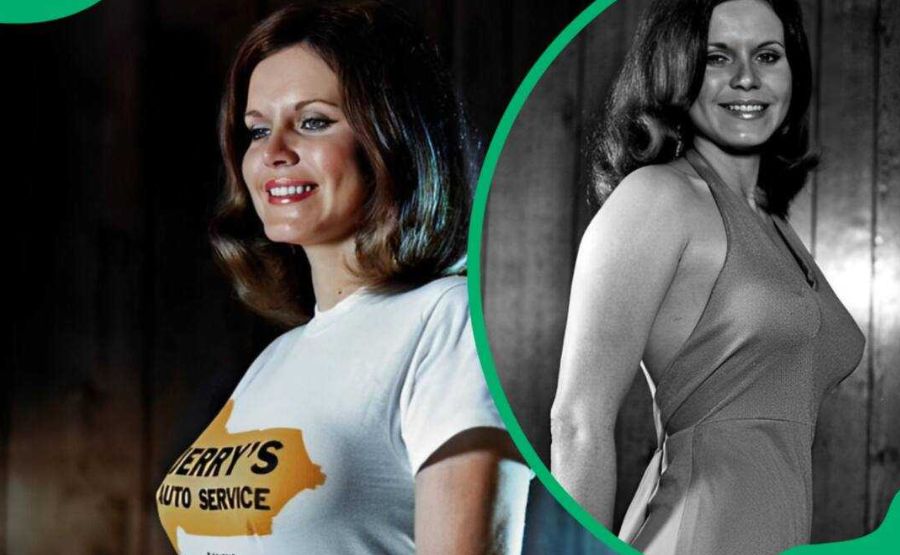
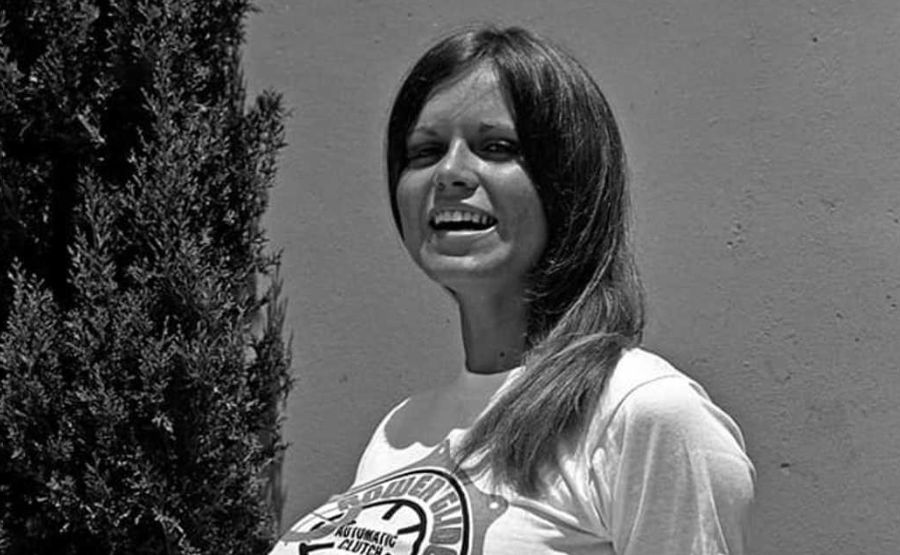
Her look was distinctive and very much of its time: long, straight brown hair. Go-go boots. Bold, body-conscious outfits in the 1970s style. She had a wide smile that came easily and a presence that filled the space around her.
But more than any of that — she was genuinely enthusiastic. About the sport. About the people in it. About being there. That enthusiasm wasn’t manufactured for a camera. It was real. And everyone could tell.
The Orange County International Raceway — OCIR to everyone who loved it — became her home track in a way. She was a regular there. A fixture. The kind of person whose absence on a race day would have been noticed and felt.
The Titles That Made It Official
In 1970, Barbara was crowned Queen of the 6th Annual U.S. Professional Dragster Championship at Orange County International Raceway.
Let that land for a second.
This wasn’t a small local thing. This was one of the biggest drag racing events in America. And she was the face of it.
Then in 1973, she earned what was arguably the peak moment of her career — being named Queen of the Professional Dragster Association. The PDA Queen. In a sport with a lot of trophy girls, a lot of events, and a lot of competition for those titles — she won the biggest one.
By this point, she wasn’t just a trophy girl at a racetrack. She was a brand. Her face was on t-shirts. Her image ran in advertisements. Companies that wanted to sell to drag racing fans knew exactly whose face could move product.
She worked with a photographer named Tom West — more on him in a bit — who captured her in image after image that somehow managed to look both perfectly staged and completely natural at the same time.
She was, by any honest measure, a star.
The Private Side — A Mother, a Marriage, a Quiet Life
Fame is a strange thing. It shows you one face of a person. The lit-up, camera-facing face.
Barbara was careful about the rest.
She was married — took the last name Roufs from her husband — but she kept his identity almost entirely out of the public eye. Even now, decades later, his name is not widely known. She protected that part of her life deliberately.
What we do know: she had a daughter. Named Jet Dougherty.
Jet was born when Barbara was 29 — the same year she was stepping into the spotlight. A lot happening at once, in other words. A career taking off and a child arriving. Barbara handled both.
She lived with her family in Fresno, California — not far from where she grew up in Clovis. By all accounts, she was a devoted mother who worked hard to keep her family life separate from the noise and chaos of the racing world. She wanted her daughter to grow up with some normalcy.
There are also mentions of a granddaughter — Crystal Dougherty — who later said she could see her grandmother’s features in her own reflection. Which is a quietly beautiful detail.
Life After the Spotlight
At some point in the late 1970s or early 1980s, Barbara stepped away from drag racing.
We don’t know exactly when. Or why. Maybe she was ready. Maybe the sport moved on. Maybe she just wanted something quieter.
What we know is that she lived in Fresno with her family. Raised her daughter. Stepped out of the world that had celebrated her so loudly.
The years between her time in drag racing and her death in 1991 are largely private. Undocumented. She didn’t court attention after her career ended.
And then, in January 1991, something happened.
January 1991
She was 47 years old.
Her daughter, Jet, later confirmed it — Barbara Roufs died by suicide in January 1991.
That’s the fact of it.
The why is something nobody has ever really answered. There were no public letters. No explanations. Her family, out of respect and grief, kept the details entirely private. Her close friends didn’t speak publicly about it either.
What we’re left with is the fact itself.
And the strange, aching weight of it.
Because this was a woman who, from every photograph ever taken, radiated joy. She smiled like she meant it. She laughed easily. She brought energy into every space she entered. By every account from the people who knew her — racers, fans, fellow trophy girls — she was warm and genuine.
And yet.
That’s the hard truth about grief and struggle and what goes on inside people. It doesn’t always match the outside. It often doesn’t. The people who seem the most alive can be carrying things that never show up in photographs.
Her death shocked the drag racing community. People who remembered her vividly — the smiling woman with the long hair and the go-go boots who made race days feel more electric — couldn’t quite reconcile that image with what had happened.
But grief doesn’t need to reconcile. It just needs to be held.
2016 — When the Photos Came Back
For a long time after her death, Barbara Roufs was largely forgotten outside of the tight-knit drag racing community.
And then a photographer named Tom West did something.
West had been one of the most important visual documentarians of the Southern California drag racing scene in the 1970s. He had a particular eye for the people of the sport — not just the machines. He’d spent years photographing Barbara, capturing her in moments that managed to feel both iconic and intimate.
In 2016, West shared a collection of those old photographs online.
The response was something he might not have anticipated.
The internet found her. Old fans who remembered her got emotional. Younger people who’d never heard her name became genuinely captivated. The photos spread across Instagram, Pinterest, Reddit, Facebook. People in racing forums started having long, detailed conversations about who she was and what she’d meant to the sport.
And then something even more moving happened.
Jet Dougherty — Barbara’s daughter — came forward online and left a comment.
She wrote about her mother. Said Barbara had been well known and deeply loved. Said she’d been surprised to find the photos online, but that she believed her mother would have been proud to see them — because they showed some of her happiest moments. Her best days.
Crystal Dougherty, Barbara’s granddaughter, also responded. Said she could see her grandmother in herself.
It was quiet and tender and real. And it gave the internet something to hold onto beyond just the images.
What Made Her Different — Really
There have been a lot of trophy girls in motorsport history. A lot of beautiful women who stood in victory lanes and handed out hardware.
Barbara Roufs stood apart in specific, concrete ways.
Her age was one. At 29, she carried herself differently. She wasn’t trying to impress anybody — she already had. That maturity was magnetic in a world full of younger, more uncertain energy.
Her authenticity was another. She actually cared about drag racing. She wasn’t just passing through. She understood what was happening on the track, she respected the racers, and they respected her back.
And then there’s what she represented — without necessarily intending to.
In a sport that was almost entirely male, that celebrated male drivers and male mechanics and male everything — Barbara came in and became a name. A real name. Not just a decoration but a presence. Not just a face but a personality.
She helped shift how women were seen in motorsports. Not dramatically. Not with speeches. Just by being there, being real, and being good at what she did.
That matters.
Her Legacy — Alive in Old Photos and Online Forums
Barbara Roufs never got a Wikipedia page.
There’s no museum exhibit. No official Hall of Fame plaque with her face on it (though honestly, there probably should be one).
What she has instead is something stranger and maybe more honest — she lives in photographs. In the memories of people who saw her at the track. In the occasional Reddit thread where someone shares one of Tom West’s images and starts a conversation.
Her photos — the ones West took — are now collector’s items. Sold online. Passed between enthusiasts who want to own a piece of what that era felt like.
Her daughter remembers her as joyful. Her fans remember her as iconic. And new generations keep finding her, keep being curious, keep asking the same question:
Who was Barbara Roufs?
That question alone is a kind of legacy.
She was a woman who showed up with confidence in a world that wasn’t exactly built for her. She did her job beautifully, loved her daughter fiercely, and kept the most painful parts of herself very close to the chest.
She deserved more time.
She deserved more of whatever it was she needed in those quiet years after the cameras stopped following her.
But she left something behind that people are still finding. Still talking about.
And that’s not nothing. That’s actually quite a lot.
Final Words
I keep thinking about that photograph.
The one from the early 1970s, her on the track, wind in her hair, smile on her face, looking like the most alive person in any room she ever entered.
She was 47 when she died.
Which means there were about 15 or so years between that photograph and January 1991. Between Barbara Roufs the Drag Racing Queen and whatever she was struggling with at the end.
We’ll never know what those years held. Her family protected that, and they have every right to.
What we can know — what’s documented and confirmed and remembered — is that she was remarkable. She walked into a sport in her late twenties, at an age when most people would have been told they were too old, and she became the most memorable person there.
She was a mother who tried to give her daughter a normal life even while her own life was anything but.
She was a woman whose smile lit up photographs that people are still collecting half a century later.
If you ever come across one of Tom West’s images of her — and if you search, you will — look at her eyes. Not just the smile. The eyes.
She looks happy.
And maybe she was. For a long time, maybe she really was.
That’s enough to hold onto.
FAQs
1. What happened to Barbara Roufs?
At the age of 47, Barbara Roufs passed away in January 1991. Her death was confirmed by her daughter, Jet Dougherty, as a suicide. The reasons behind her decision have never been made public, and her family has kept those details private out of respect and grief.
2. Who was Barbara Roufs exactly?
She was an American drag racing trophy girl and model who became famous in the late 1960s and early 1970s. She was most closely associated with the Orange County International Raceway in Southern California, where she became a beloved and iconic figure.
3. Why was Barbara Roufs so famous in drag racing?
A few reasons. She was older than most trophy girls — around 29 when she started — which gave her a maturity and confidence that set her apart. She also had a distinctive look (long straight brown hair, go-go boots, bold 1970s fashion) and a genuine enthusiasm for the sport that people could feel. She was crowned Queen of the 6th Annual U.S. Professional Dragster Championship in 1970 and PDA Queen in 1973.
4. Who was Barbara Roufs’ daughter?
Her daughter is Jet Dougherty. In 2016, when photographer Tom West shared old photos of Barbara online, Jet came forward with a touching tribute, saying her mother had lived a happy, full life and would have been proud to see those photos. Barbara also has a granddaughter named Crystal Dougherty.
5. Who was Barbara Roufs’ husband?
This is genuinely unknown. Barbara took the surname Roufs from her marriage, but she kept her husband’s identity entirely private throughout her life. Even after her death, his name has never been confirmed publicly.
6. What did Barbara Roufs look like?
She was 5 ft 5 in tall and had long, straight brown hair. Her measurements were reported as 32-25-32. She had a wide, natural smile and typically wore the bold 1970s fashion of the era — halter tops, short shorts, and her signature go-go boots. Her photos from this era are considered genuinely striking even by modern standards.
7. Who was Tom West and why does he matter to Barbara’s story?
Tom West was a renowned drag racing photographer who captured Barbara extensively throughout her peak career years in the early 1970s. His images of her are considered the definitive visual record of her time in the sport. In 2016, he shared these photos publicly online, which sparked a massive resurgence of interest in Barbara’s life and legacy.
8. What was Barbara Roufs’ net worth?
At the time of her death, her estimated net worth was approximately $1.5 million. For a trophy girl and promotional model working in the 1970s, this was quite substantial. Her income came from race event appearances, brand sponsorships, advertising modeling, and product promotions aimed at the drag racing market.
9. Did Barbara Roufs have a Wikipedia page?
No. There is no official Wikipedia article about her. Her story exists across fan forums, racing history blogs, and several biography-style websites, but she hasn’t received formal recognition in mainstream encyclopedic sources — which many fans feel is an oversight.
10. Where did Barbara Roufs live?
She grew up in Clovis, California, and later lived in Fresno, California, where she raised her daughter. Her family was from the Clovis/Fresno area of California’s Central Valley, and she remained connected to that region throughout her life.
11. What titles did Barbara Roufs win?
She was crowned Queen of the 6th Annual U.S. Professional Dragster Championship at Orange County International Raceway in 1970, and she was named Professional Dragster Association (PDA) Queen in 1973 — the most prestigious title of her career.
12. Why do people still talk about Barbara Roufs today?
Because she represented something real. Her photos capture the spirit of 1970s American drag racing in a way that feels alive even now. But beyond the nostalgia, her story — of a woman who carved out real fame in a male-dominated world, who loved her daughter quietly, and who carried private pain behind a very public smile — resonates in a deeply human way. When Jet’s tribute went public in 2016, a whole new generation discovered her. And they haven’t stopped talking about her since.
Come back to K and V nails for smarter ways to stay informed.