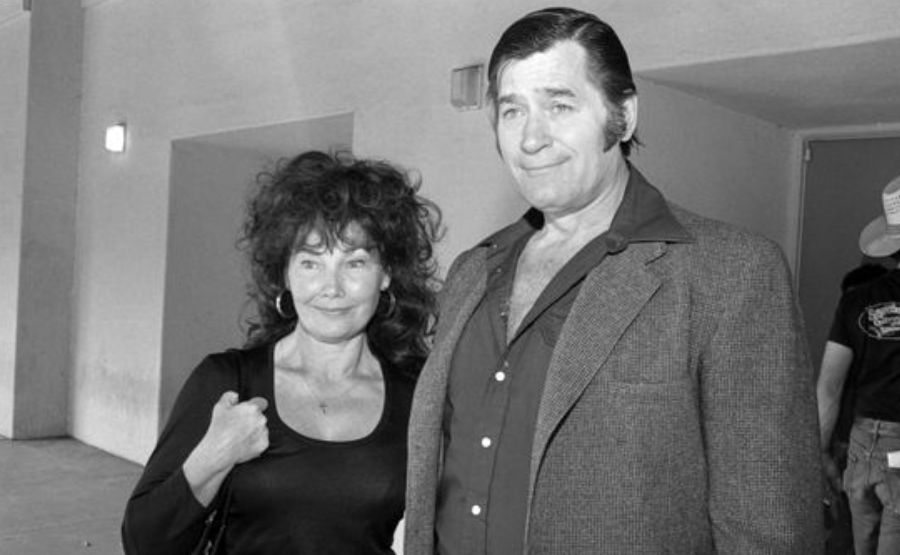
Giselle Hennessy: The Full Story of the French Woman Who Stood Behind a Hollywood Giant
Giselle Hennessy matters because her story is a window into a vanishing world — the private lives of women who chose dignity over spotlight, and who shaped the domestic reality behind some of Hollywood’s most famous careers. She was born Giselle Camille Prugnard in 1928 in rural France. She died in California in 1994. Between those two dates, she crossed an ocean, married twice, stepped quietly into Hollywood’s orbit, survived two decades beside one of television’s biggest Western stars, and left no professional record behind — only the memories of those who loved her.
This is her story, told as fully as the historical record allows.
Quick Bio
| Detail | Information |
| Full Name at Birth | Giselle Camille Prugnard |
| Professional Name | Giselle Hennessy (later Giselle Walker) |
| Date of Birth | May 13, 1928 |
| Place of Birth | Razès, Haute-Vienne, Nouvelle-Aquitaine, France |
| Nationality | French |
| Ethnicity | Caucasian / French |
| Religion | Christian |
| Zodiac Sign | Taurus |
| Height | Approximately 5 feet 7 inches (1.70 m) |
| First Marriage | Thomas Daniel Hennessy (m. 1956, ended ~1960s–70s) |
| Second Marriage | Clint Walker (m. May 26, 1974 – her death January 1, 1994) |
| Children | None biological; stepmother to Valerie Walker |
| Date of Death | January 1, 1994, California, USA |
| Age at Death | 65 years old |
| Cause of Death | Unknown; speculated natural causes |
| Burial | Holy Cross Cemetery, Culver City, Los Angeles |
| Estimated Net Worth | ~$1 million (shared with Clint Walker’s estate) |
From Razès to America: A French Childhood in a Turbulent Century
Born Giselle Camille Prugnard on May 13, 1928, in Razès — a small commune in the Haute-Vienne department of west-central France — Giselle entered the world during a deceptively calm period that would not last.
She grew up in the French countryside during the 1930s, as Europe moved toward its second catastrophic war in two decades. France of that era was a nation shaped by defeat, recovery, and resilience. Those qualities tend to settle into the people who live through them.
Her family background is not documented in any public record. She kept that part of her life entirely private, even in later years. What is known is that she grew up speaking French, embedded in the culture of a rural département that valued land, community, and traditional family structure.
The specific circumstances that eventually brought her across the Atlantic to the United States are not recorded. What is clear is that at some point in the 1950s, Giselle Camille Prugnard became part of the American world — first through marriage to a Hollywood figure, and later through decades of life in California.
Her childhood taught her something that would define her entire adult life: how to exist fully without requiring anyone’s attention.
See also “Yasmin Abdallah Age: The Full Story of Fashion’s Most Quietly Powerful Name“
The First Marriage: Becoming Giselle Hennessy
Before she ever met Clint Walker, Giselle Prugnard married a man named Thomas Daniel Hennessy. That marriage gave her the surname she carried for the rest of her life.
Tom Hennessy was an actor and stuntman in Hollywood — part of the rough-and-tumble world of physical performance that built the Western film genre. He worked in films including Big Jake, The Buccaneer, North to Alaska, The Green Berets, and The War Wagon — productions that placed him alongside major names in a genre at the height of its popularity.
The couple married in 1956. The marriage produced no children. It ended quietly somewhere in the 1960s or early 1970s, with neither party ever speaking publicly about what caused the separation.
When the marriage ended, Giselle kept the name Hennessy. That choice — retaining the identity of a man she had left rather than reclaiming her French birth name — suggests she had built a life in America under that name and saw no reason to step backward.
She was now, fully, an American woman with a French past and an uncertain present. That would soon change.
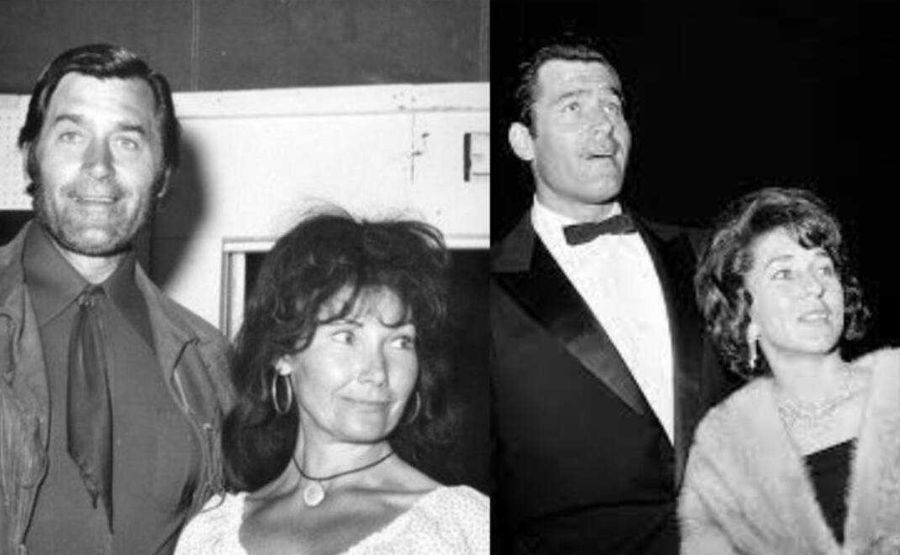
Clint Walker: The Man She Said Yes to in 1974
Clint Walker was not a subtle man. Born Norman Eugene Walker on May 30, 1927, in Hartford, Illinois, he stood 6 feet 6 inches tall with a 48-inch chest and a 32-inch waist. He had fought on Mississippi riverboats, worked oil fields in Texas, served in the U.S. Merchant Marine, and done undercover work on the Long Beach waterfront before Hollywood found him.
His career began with Cecil B. DeMille’s The Ten Commandments in 1956. Warner Bros. immediately signed him and cast him as Cheyenne Bodie in the ABC Western series Cheyenne, which ran from 1955 to 1962. The show became a phenomenon. Walker’s commanding physical presence and quiet intensity made Cheyenne Bodie one of the most recognizable cowboys in television history.
By the 1960s, he had expanded into film. He appeared in Send Me No Flowers (1964), None but the Brave (1965) directed by Frank Sinatra, The Night of the Grizzly (1966), and most significantly, The Dirty Dozen (1967), the Robert Aldrich war film starring an ensemble cast that included Lee Marvin, Ernest Borgnine, and Telly Savalas. Walker’s role as convict Samson Posey gave him his broadest mainstream film exposure.
This was the man Giselle chose. He was famous, physically imposing, privately complicated, and twice-scarred by his first marriage — to Verna Garver, which had lasted from 1948 to 1968.
They married on May 26, 1974, in a private ceremony in Cheyenne, Wyoming — a location that quietly echoed Walker’s most famous role. The ceremony was kept deliberately small. No press. No photographers. Just two divorced people in their forties, choosing each other in a state whose name had made one of them famous.
A Marriage Defined by Shared Privacy
The twenty years Giselle and Clint spent together left almost no public record, which is remarkable given Walker’s celebrity status. That absence of documentation was not accidental. It was a choice both of them actively maintained.
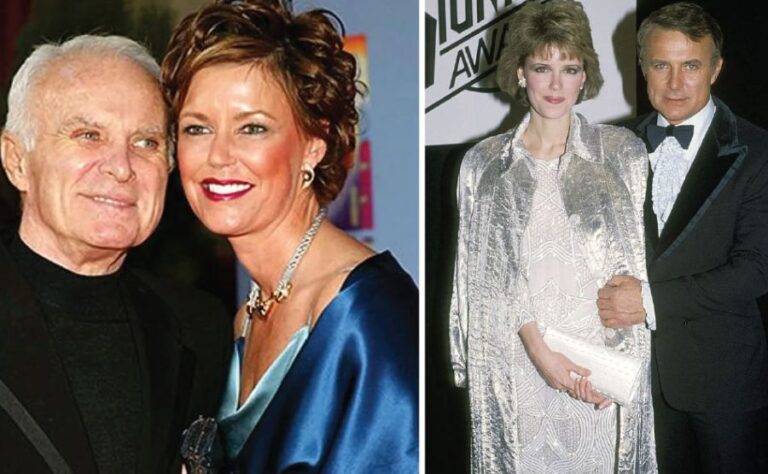
They lived in Los Angeles, close enough to the entertainment industry for professional purposes but away from its social machinery. They attended some public events — the most documented being the 1990 rededication of Warner Bros. Studios, where photographs show them together, relaxed and clearly at ease with one another.
Clint Walker later described Giselle in terms of quiet admiration. His praise for her, shared in various interviews, was consistent: she was warm, steady, and real. Publicly, he presented an image of Hollywood confidence. In private, he found in Giselle a woman who did not require him to perform.
The marriage also carried a shadow that never fully lifted. In May 1971 — three years before they wed — Walker had suffered one of Hollywood’s most dramatic near-death experiences. Skiing at Mammoth Mountain in California, he tumbled out of control and came to a violent stop, a ski pole piercing directly through his heart. He was declared dead at the hospital before a physician detected faint signs of life and rushed him to surgery. He returned to work just two months later.
By the time Giselle married him in 1974, she knew exactly the kind of man she was committing to: someone who had cheated death, continued working, and never seemed particularly inclined to slow down.
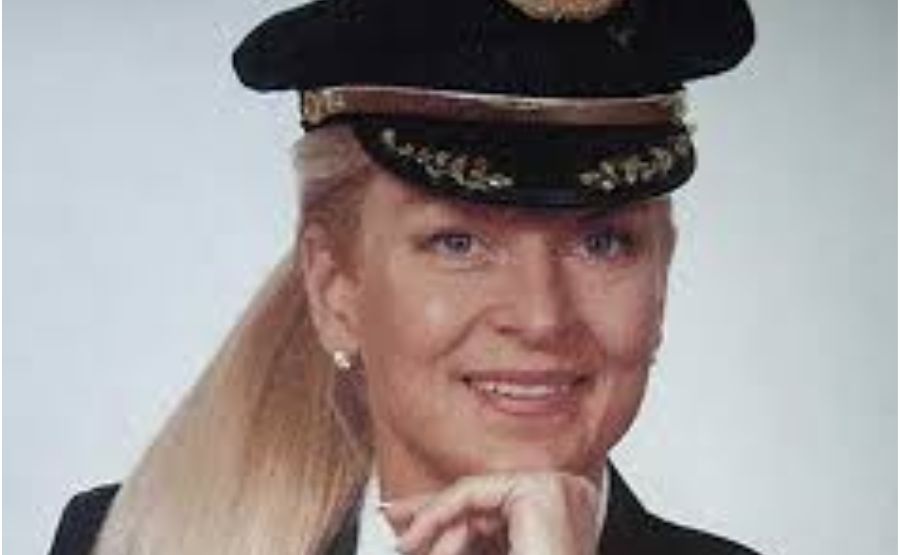
Giselle’s Role in the Marriage: Homemaker and Stepmother
Giselle held no professional career during her marriage to Clint Walker. Every record from this period describes her as a homemaker — a term that, in the context of a working Hollywood actor’s household, understates the actual complexity of the role.
She became stepmother to Valerie Walker, Clint’s daughter from his first marriage to Verna Garver. Valerie had been born in 1950 and grew up to make history as one of the first female airline pilots hired by Western Airlines, reaching the rank of First Officer in 1979. The relationship between Giselle and Valerie was private but appears to have been warm, at least by the absence of any reported conflict.
Giselle and Clint had no biological children together. That fact is noted in every account of their marriage without elaboration — whether by choice, circumstance, or age (Giselle was 46 when they married in 1974), no record addresses it.
Her life during these decades was defined by what she was not doing. She was not seeking press coverage. She was not building a personal brand. She was not exploiting her proximity to a famous husband for personal gain. She was, by all available accounts, simply living her life with the man she had chosen.
Net Worth: What the Numbers Actually Reflect
Giselle Hennessy’s personal net worth is one of the most genuinely unknowable facts in her biography. She had no documented independent income. She maintained no public professional career from the mid-1950s onward. She left no business records, no property filings, and no financial disclosures in the public domain.
What exists instead are estimates — and they vary widely. Some sources suggest approximately $1 million. Others reach as high as $3 million. These figures appear to reflect not Giselle’s independent wealth but her share of the household financial status she occupied as Clint Walker’s wife for twenty years.
The authoritative figure for Clint Walker’s estate comes from Celebrity Net Worth, which placed his worth at $2 million at the time of his death in May 2018. Some smaller biography sites inflate that figure to $4 million without citing credible sources.
What is reasonable to conclude: Giselle lived comfortably. Clint Walker’s career — spanning seven seasons of Cheyenne, multiple theatrical films, television appearances through the 1980s and 1990s, and the licensing value of a classic Western franchise — generated solid, sustained income over four decades. Their household was not extravagant by Hollywood standards, but it was financially stable.
Giselle’s personal net worth at the time of her death in January 1994 almost certainly came from marital assets rather than any independent earnings. The $1 million estimate is the most defensible, acknowledging that her financial position derived entirely from the shared life she built with one of television’s most recognizable faces.
January 1, 1994: The Day She Left
Giselle Hennessy Walker died on January 1, 1994, in California. She was 65 years old.
The cause of her death has never been publicly disclosed. Neither Clint Walker nor any family member released a statement specifying the medical cause. The most frequently cited speculation is natural causes or illness, but nothing in the public record confirms either.
The date — New Year’s Day — has a particular kind of weight. She died on the first day of a year she never saw. Clint Walker survived her by 24 years, dying of congestive heart failure in Grass Valley, California, on May 21, 2018, at age 90.
Her funeral was conducted in the United States. She was buried at Holy Cross Cemetery in Culver City, Los Angeles — the same cemetery where many Hollywood figures and their families rest. The burial site reflects the life she had lived: close to the industry, but never quite of it.
Clint Walker married his third wife, Susan Cavallari, in 1997 — three years after Giselle’s death. He spent his remaining years in Grass Valley, California, where he died at nearly 91. His ashes were given to Cavallari after his cremation.
Giselle’s grave at Holy Cross Cemetery stands as the clearest public marker of her American life. She arrived from France, passed through Hollywood’s orbit, loved two men, raised a stepdaughter, and left without ceremony — which is exactly how she would have wanted it.
The Clint Walker Legacy That Outlasted Her
Understanding Giselle Hennessy requires understanding what she stood beside for twenty years. Clint Walker was not simply a television actor. He was a cultural anchor for the Western genre at its peak.
Cheyenne ran from 1955 to 1962 and virtually launched the Western television format that dominated American prime time for the next decade. Walker’s physical scale — 6 feet 6 inches, with a chest measurement that became part of his public mythology — made him visually unlike any other actor of the era. His baritone voice added another dimension. Warner Bros. Records released an album of Walker performing traditional songs and ballads.
His film work includes titles that remain significant: The Dirty Dozen (1967) with Lee Marvin is regularly listed among the great war films of the 1960s. Send Me No Flowers (1964) placed him in a Rock Hudson–Doris Day romantic comedy and showed range beyond the Western hero. His voice acting credit in Small Soldiers (1998) gave him a final screen presence nearly four decades after Cheyenne began.
He received a star on the Hollywood Walk of Fame and was inducted into the Hall of Great Western Performers at the National Cowboy & Western Heritage Museum in Oklahoma City in 2004. In 1997, he was awarded the Golden Boot.
Giselle was present for the bulk of this career — not as a participant, but as the woman who maintained the domestic center of a man continuously in the public eye. That role does not generate headlines, but it is not nothing.
Final Words
Giselle Hennessy’s life resists the narratives that celebrity culture normally applies to women in her position. She is not a cautionary tale. She is not a hidden tragedy. She is not a feminist hero. She is something harder to categorize: a French woman who crossed the Atlantic, married twice, chose privacy as a genuine lifestyle rather than as a reaction to anything, and spent two of her six and a half decades as the steadying presence beside a man the world was watching.
Her estimated net worth of approximately $1 million reflects not personal ambition but personal loyalty — decades of building a household with someone whose career provided financial stability while her role remained invisible to the cameras that tracked his every public appearance.
She died before the internet could record her. She left no social media, no public statements, no professional legacy outside a marriage. What she left instead was a daughter who made history in aviation, a husband who survived her by nearly a quarter-century and never stopped praising her character, and a grave in Culver City that carries her chosen name rather than the French one she was born with.
That choice says more about her than any biography can.
FAQs
1. Who was Giselle Hennessy?
Giselle Hennessy was a French-born woman, born Giselle Camille Prugnard on May 13, 1928, in Razès, France. She is best known as the second wife of American actor Clint Walker, with whom she was married for twenty years from 1974 until her death in 1994.
2. What was Giselle Hennessy’s net worth?
Her personal independent net worth is not documented in any public record. Estimates ranging from $1 million to $3 million reflect her shared financial position as Clint Walker’s wife rather than independently earned wealth. The $1 million range is the most defensible figure.
3. What was Clint Walker’s net worth at death?
Celebrity Net Worth, the most authoritative entertainment finance tracker, placed Clint Walker’s net worth at $2 million at the time of his death in May 2018.
4. When and where did Giselle Hennessy die?
She died on January 1, 1994, in California, at age 65. She was buried at Holy Cross Cemetery in Culver City, Los Angeles.
5. What was the cause of Giselle Hennessy’s death?
The cause of her death has never been publicly disclosed. Speculation among biographers points toward natural causes or illness, but no official medical cause appears in any record.
6. Did Giselle Hennessy and Clint Walker have children?
No. They had no biological children together. Giselle became stepmother to Valerie Walker, Clint’s daughter from his first marriage to Verna Garver.
7. Who was Tom Hennessy, Giselle’s first husband?
Thomas Daniel Hennessy was an actor and stuntman who appeared in films including Big Jake, The Green Berets, North to Alaska, and The War Wagon. Giselle married him in 1956. The marriage ended sometime in the 1960s or early 1970s. She kept his surname for the rest of her life.
8. When did Giselle and Clint Walker get married?
They married on May 26, 1974, in a private ceremony in Cheyenne, Wyoming. The location echoed Walker’s most famous role as Cheyenne Bodie in the ABC Western series.
9. Was Giselle Hennessy ever a public figure independently?
No. She held no professional career during her marriage to Clint Walker and left no documented public record of professional activity. Her public visibility derived entirely from her marriage.
10. Who was Valerie Walker, and what was her connection to Giselle?
Valerie Walker was Clint Walker’s daughter from his first marriage to Verna Garver, born in 1950. She became one of the first female pilots hired by Western Airlines and reached First Officer status in 1979. Giselle was her stepmother from 1974 until Giselle’s death in 1994.
11. Did Clint Walker remarry after Giselle’s death?
Yes. In 1997, three years after Giselle’s death, Clint Walker married Susan Cavallari. They remained together until his death on May 21, 2018, in Grass Valley, California. Walker’s ashes were given to Cavallari.
12. What was Clint Walker’s most famous role?
Walker is best known as Cheyenne Bodie in the ABC Western television series Cheyenne, which ran from 1955 to 1962. He also appeared in The Dirty Dozen (1967) alongside Lee Marvin, one of the defining war films of the decade.
13. Where is Giselle Hennessy buried?
Giselle Hennessy was laid to rest at Holy Cross Cemetery in Culver City, Los Angeles, California.
Come back to K and V nails for smarter ways to stay informed.